
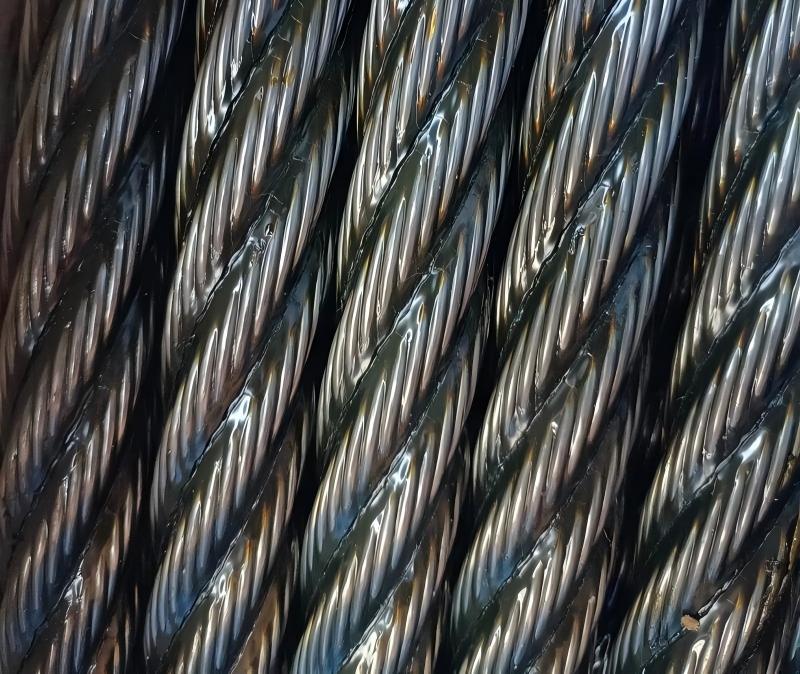
Coastal ports operate in environments characterized by high salinity and humidity. Under the high-frequency, heavy-load conditions typical of ship-to-shore cranes, portal cranes, and yard cranes, standard wire ropes are prone to internal corrosion and surface wear; frequent replacements drive up maintenance costs and pose safety risks. Thanks to the dual advantages of its structural design and superior corrosion resistance, compacted-strand wire rope has become the preferred solution for port lifting operations.
This product utilizes a die-compaction process, ensuring tight contact between wires within the strand to create surface-to-surface contact. This results in a larger metallic cross-sectional area for the same outer diameter and significantly higher breaking strength. The rope offers a smoother contact surface with sheaves and drums, superior wear resistance compared to conventional round-strand ropes, and excellent resistance to wire breakage or deformation during repeated bending. The rope body undergoes hot-dip galvanizing to create a dense, uniform zinc coating; combined with a filled, oil-retaining structure, this effectively blocks the ingress of salt spray and moisture into the core, drastically slowing internal pitting corrosion. It is ideally suited for high-intensity operations such as container handling and bulk cargo lifting.
Compared to traditional wire ropes, this product offers more than double the service life, reducing the frequency of downtime for replacements and lowering overall terminal operating costs. Available in a wide range of specifications to suit various port lifting equipment, it combines high strength, fatigue resistance, and long-lasting corrosion protection, making it the ideal rigging choice for port lifting machinery.
NAVIGATION
Send Us A Message